Storms & Insurance · 6 min read
What Hail Actually Does to Asphalt Shingles
Published
Homeowners look up after a hailstorm, see no holes, and assume the roof is fine. That assumption costs Miami Valley homeowners real money every year.
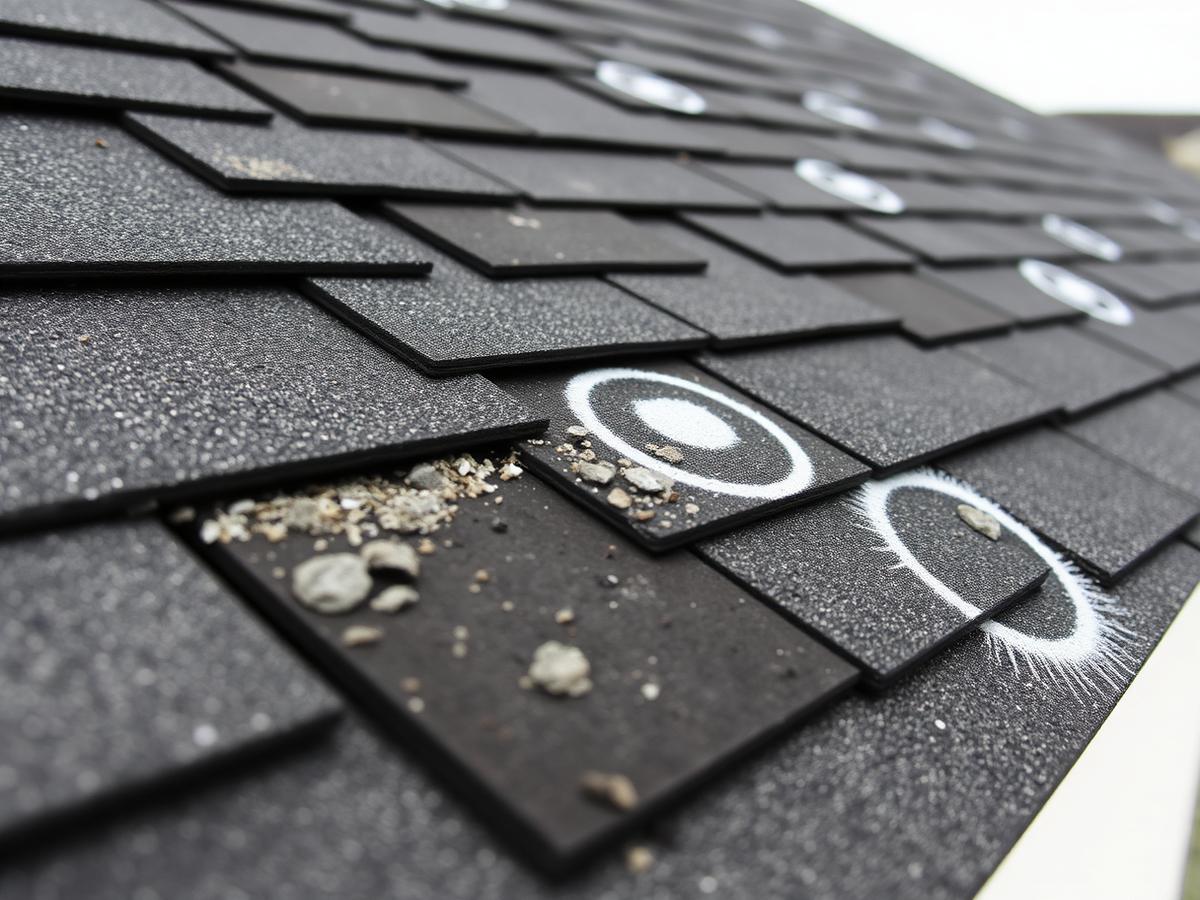
Bruising, not holes
Hail damage to asphalt is usually a bruise: the impact fractures the fiberglass mat under the surface and knocks granules loose. The shingle looks intact but the protective layer is compromised, and UV exposure finishes the job over the next one to three years.
How to identify it
A hail hit is round, roughly the diameter of the stone, with a darker exposed asphalt center and a soft feel when pressed — like a bruise on an apple. Random granule loss without that pattern is usually just wear.
Collateral evidence
Adjusters check soft metals first: gutter aprons, downspouts, roof vents, A/C condenser fins, and mailboxes. Dents there prove hail of a damaging size hit the property, which makes the roof discussion much shorter.
Size thresholds
One inch is the common threshold for shingle damage, though older or brittle shingles can be damaged by three-quarter-inch stones. Steep slopes facing the storm's direction take the worst of it.
If any of this applies to your own home, our asphalt shingle roofing crews handle it every week, and you can see how we work in your area on our Troy, Ohio roofing page. Inspections and written estimates are free either way — call 937-749-7767.